Behind the Frame / Cord Allman
A gesture is a whole sentence
A lifted arm. A turning body. A shape that is already disappearing. Movement gives a still photograph its pulse.
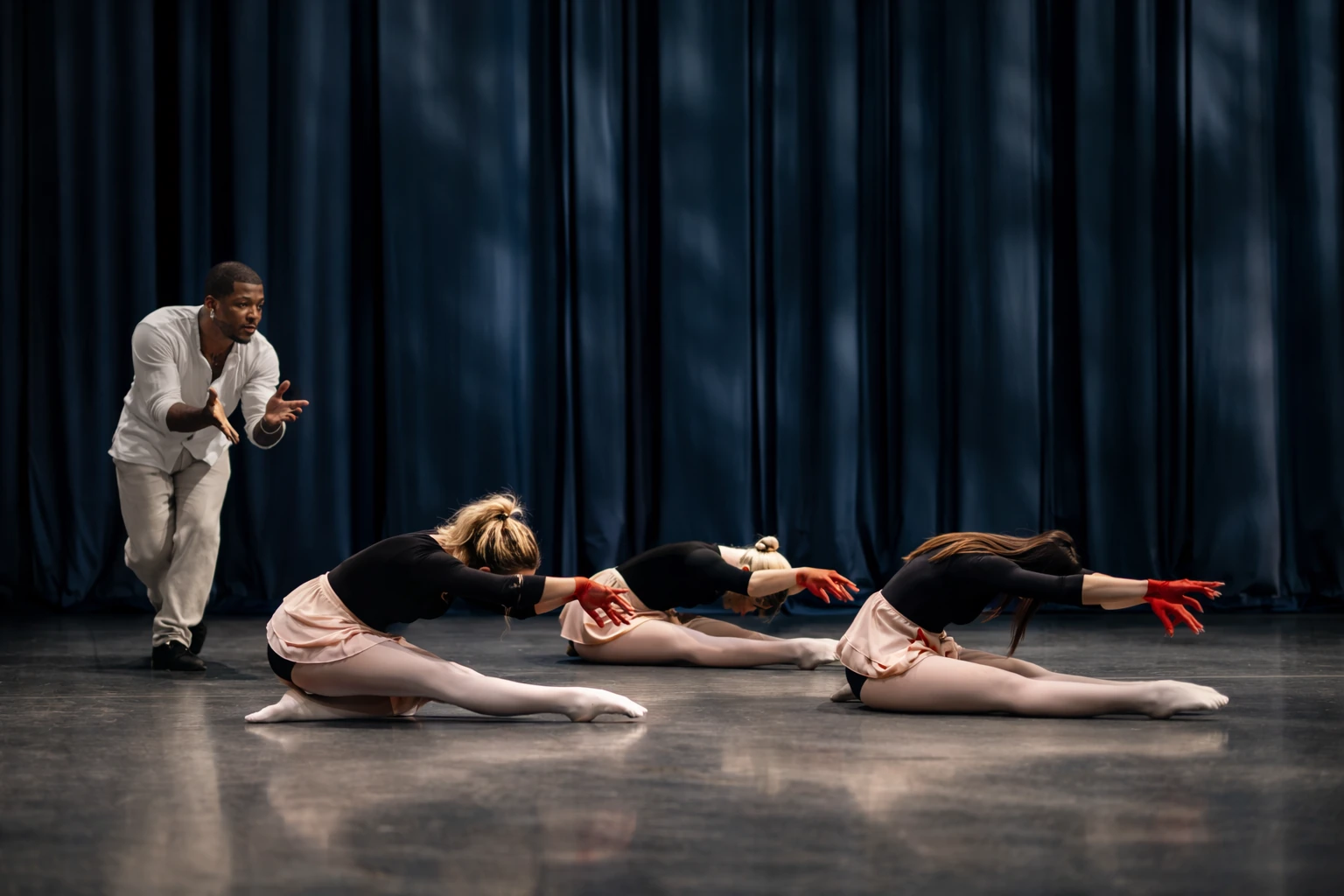
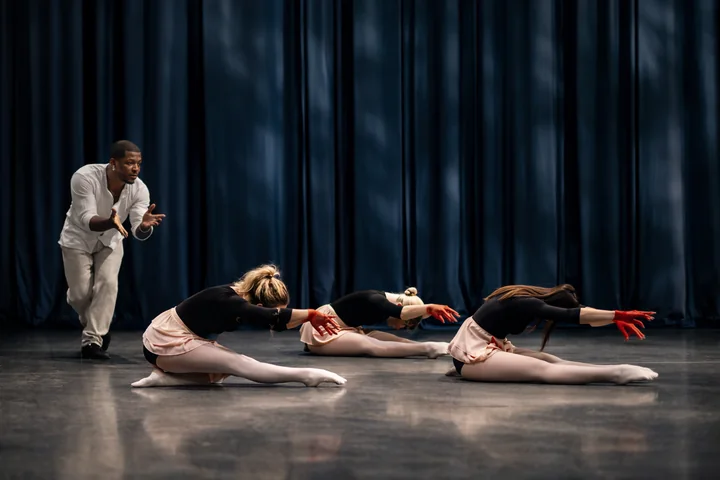
The dancers’ pale skirts and red gloves make different kinds of movement visible. Fabric spreads across the floor while the hands draw smaller, sharper shapes. The blue curtain gives those gestures room to stand out.
A moving figure does not need to fill the frame to carry it. Watch the space between people: the gap under an arm, the direction of a shoulder, the pause before two shapes overlap. These spaces help a viewer understand what the bodies are doing.
Freezing movement is one choice. Letting it blur is another. A crisp hand can reveal a gesture; a blurred sleeve can suggest its speed. The useful question is what the movement should feel like, then which camera choice will help that feeling survive.
Anticipation begins before the shutter. Notice a repeated step or a rhythm in the action. Frame the place where a gesture may arrive and keep watching after the obvious peak. A recovery, a breath or a glance can carry as much life as the performance itself.
This reading comes from what is visible in the photograph. It is an invitation to practise attention, rather than a claim about the camera settings or the people’s private thoughts.