Yearbook Academy / Field guide
Shadow play: make the missing light matter
Use a window, a wall and a little patience to build a photograph with shape. Learn to control a silhouette, separate a subject and make a shadow part of the composition.
Suggested settings are starting points. Light, subject speed and your own observations decide the next adjustment.
Find an edge you can read
Look at where light stops. Direct sunlight or a small light source often makes a sharper shadow; a large source seen from the subject creates softer transitions. Move the subject relative to a window and watch how the shadow changes before touching a setting.
A patterned shadow can be beautiful and still hide an important eye or expression. Move yourself or the subject a little. Decide whether the pattern belongs on the face, the clothes or the background.
Build a readable silhouette
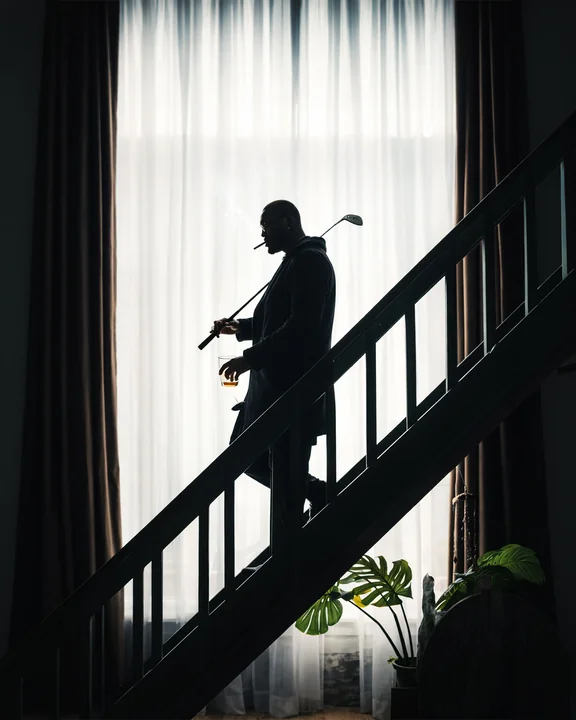
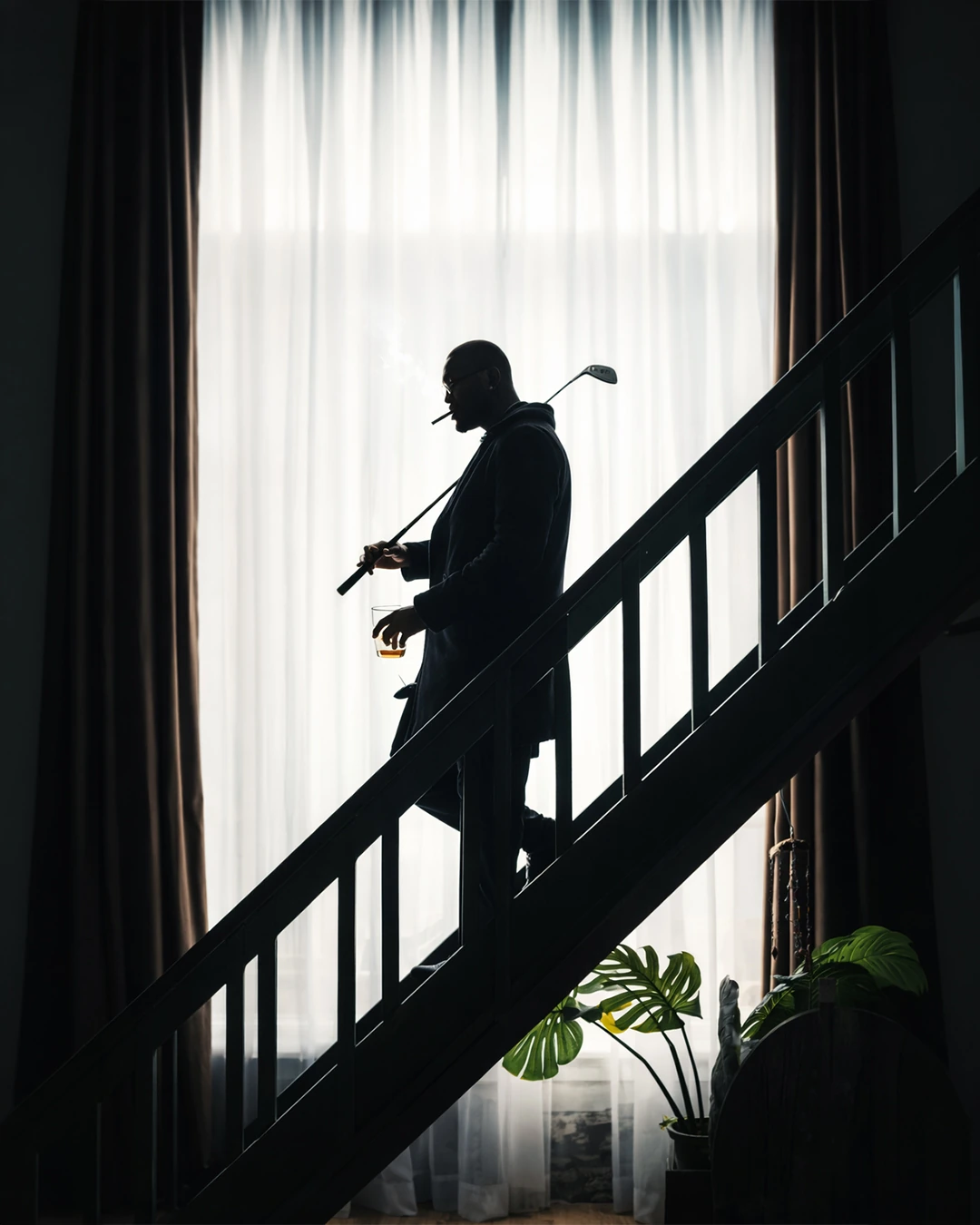
Place the subject against a brighter area. Expose to preserve the background detail that matters, then check how dark the subject becomes. Avoid looking through a viewfinder directly at the sun.
Separate the outline: an arm away from the torso, a face in profile or a small gap between two people. If every shape overlaps, the viewer may have little to recognise. A silhouette works through contour, not only darkness.
Use subtraction without losing the subject
For a portrait, the side facing away from the light may be brighter than you want because nearby surfaces reflect light back. A dark cloth or board outside the frame can reduce that bounce. Keep it stable, away from heat and clear of walking routes.
Review important highlights and shadow detail on the camera. A dark mood does not require destroying all detail. Change your position or the light first when the contrast is too strong for the result you want.
Three frames, one wall
With permission, place a person near a plain wall. Make a frame that includes both person and shadow. Next, show only the shadow. Finally, move so the shadow sits behind rather than beside the person.
Compare which version feels like a portrait, which becomes a graphic shape and which makes the most of the surrounding space. There is no winning setting; there is a clearer reason for each choice.