L34rn th3 fr4m3.Learn the frame. Th3n br34k 1t.Then break it.
Cord Allman
/ th3 cr4ft/ the craft
Th3 f1r5t l3550n 1 l34rn3d w45 th3 rul3 0f th1rd5.The first lesson I learned was the rule of thirds.
Th3 b1gg35t w45 kn0w1ng wh3n t0 br34k th3 rul35 0f ph0t0gr4phy. 5t4rt w1th th3
c4m3r4 y0u h4v3. W3’ll bu1ld fr0m th3r3.
The biggest was knowing when to break the rules of photography. Start with the
camera you have. We’ll build from there.
L3550n 01Lesson 01
G1v3 th3 3y3 50m3wh3r3 t0 l4nd.Give the eye somewhere to land.
Cord Allman
/ th3 cr4ft/ the craft
D1v1d3 th3 fr4m3 1nt0 n1n3 3qu4l r3ct4ngl35.Divide the frame into nine equal rectangles.
Tw0 v3rt1c4l l1n35, tw0 h0r1z0nt4l l1n35. Try pl4c1ng th3 1mp0rt4nt p4rt 0f
y0ur 5ubj3ct n34r 4 cr0551ng, 0r 4 h0r1z0n 4l0ng 4 h0r1z0nt4l l1n3. 1t g1v35
y0u 4 5t4rt1ng p01nt f0r b4l4nc1ng th3 5ubj3ct w1th th3 5p4c3 4r0und
1t.
Two vertical lines, two horizontal lines. Try placing the important part of
your subject near a crossing, or a horizon along a horizontal line. It gives
you a starting point for balancing the subject with the space around
it.
Try th15.Try this.
5w1tch 0n y0ur c4m3r4’5 gr1d. Ph0t0gr4ph th3 54m3 5ubj3ct n34r th3 l3ft th1rd,
n34r th3 r1ght th1rd, th3n 1n th3 c3ntr3. Wh1ch pl4c3m3nt h3lp5 y0u n0t1c3 wh4t
m4tt3r5?
Switch on your camera’s grid. Photograph the same subject near the left third,
near the right third, then in the centre. Which placement helps you notice what
matters?
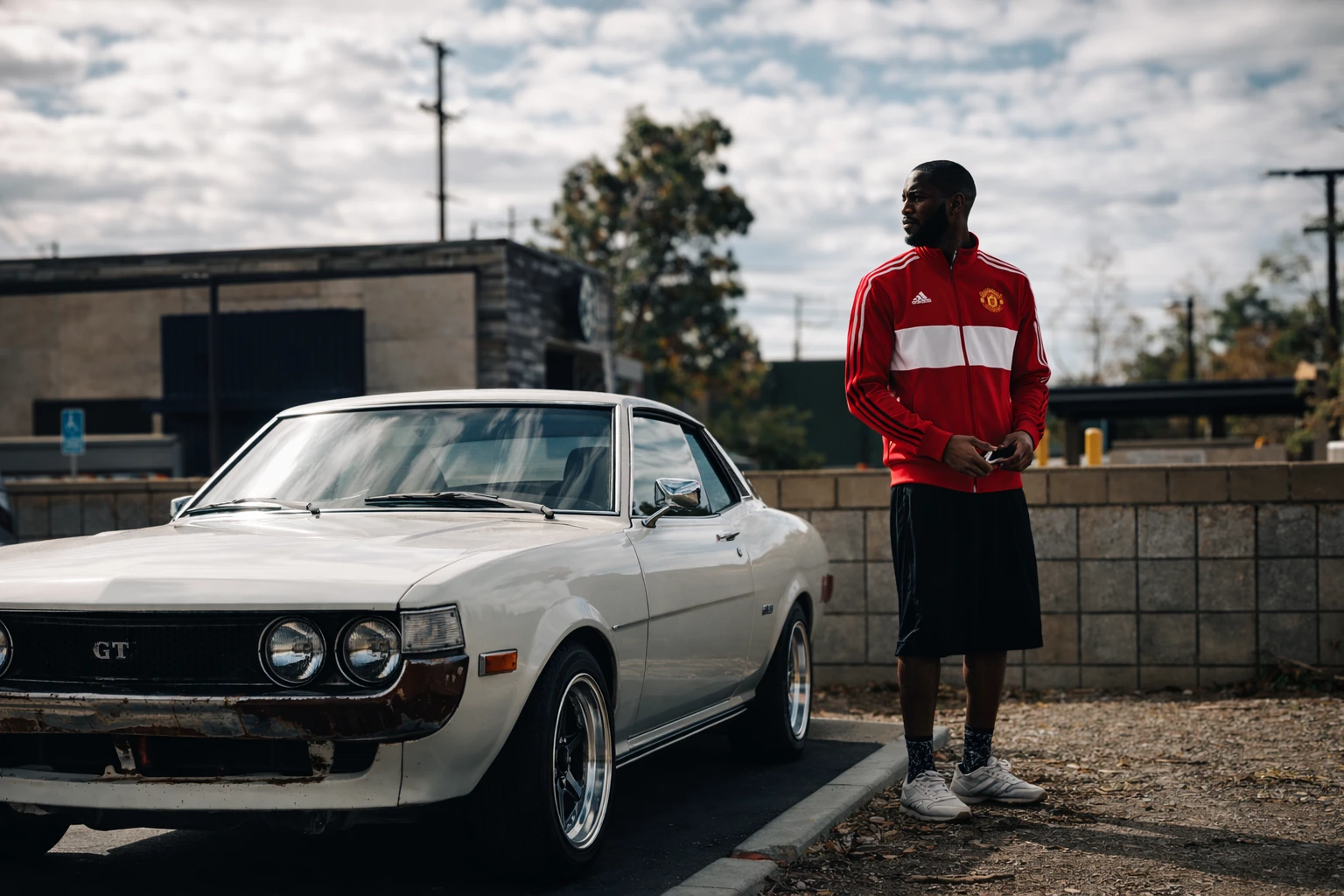
L00k 4t th3 p3r50n n34r th3 r1ght th1rd 4nd th3 5p4c3 0ccup13d by th3 c4r. Th3
gr1d h3lp5 d35cr1b3 th3 b4l4nc3; 1t d035 n0t gr4d3 th3 ph0t0gr4ph. Look at the person near the right third and the space occupied by the car. The
grid helps describe the balance; it does not grade the photograph.
Ph0t0gr4ph by Cord Allman.Photograph by Cord Allman.
L3550n 02Lesson 02
L00k 4t th3 l1ght b3f0r3 th3 53tt1ng5.Look at the light before the settings.
Cord Allman
/ th3 cr4ft/ the craft
N0t1c3 1t5 d1r3ct10n 4nd th3 3dg35 0f 1t5 5h4d0w5.Notice its direction and the edges of its shadows.
W1nd0w l1ght 0r 0p3n 5h4d3 c4n b3 4 f0rg1v1ng pl4c3 t0 b3g1n. D1r3ct 5un 0ft3n
g1v35 h4rd3r 5h4d0w5. L1ght fr0m th3 51d3 r3v34l5 5h4p3; l1ght b3h1nd 4 5ubj3ct
c4n m4k3 4 r1m 0r 51lh0u3tt3. M0v3 y0ur53lf 0r y0ur 5ubj3ct 4nd w4tch wh4t
ch4ng35.
Window light or open shade can be a forgiving place to begin. Direct sun often
gives harder shadows. Light from the side reveals shape; light behind a subject
can make a rim or silhouette. Move yourself or your subject and watch what
changes.
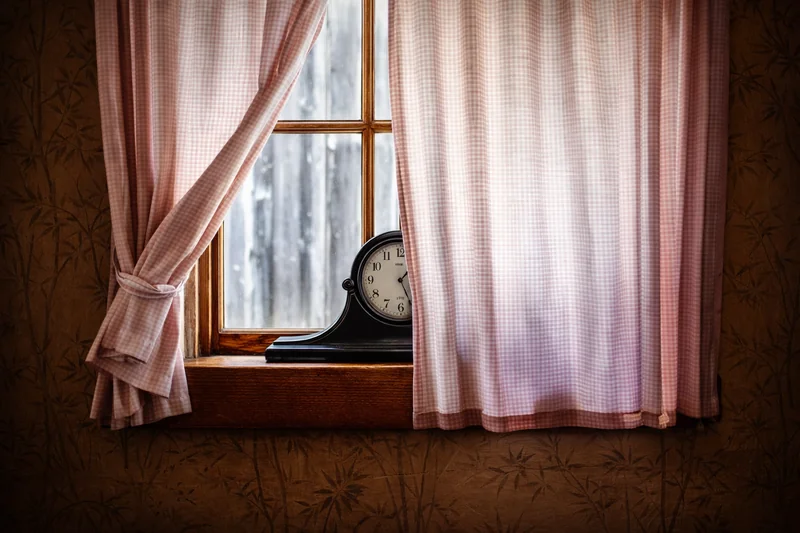
Th3 w1nd0w 4nd curt41n5 m4k3 l1ght p4rt 0f th3 5ubj3ct. N0t1c3 th3 br1ght
f4br1c 4nd d4rk3r cl0ck b3f0r3 y0u th1nk 4b0ut 4 pr353t. The window and curtains make light part of the subject. Notice the bright
fabric and darker clock before you think about a preset.
Ph0t0gr4ph by Cord Allman.Photograph by Cord Allman.
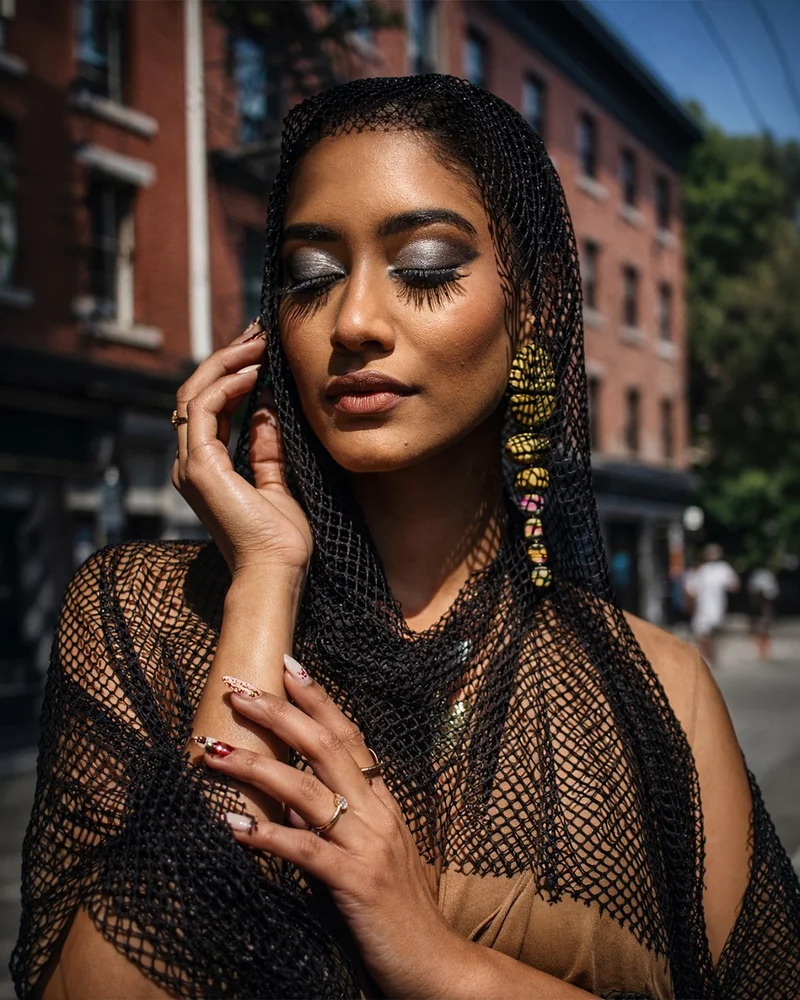
1n th15 p0rtr41t, th3 n3tt1ng c45t5 d15t1nct p4tt3rn5 4cr055 th3 f4c3. H4rd
l1ght b3c0m35 p4rt 0f th3 ph0t0gr4ph’5 ch4r4ct3r. In this portrait, the netting casts distinct patterns across the face. Hard
light becomes part of the photograph’s character.
Ph0t0gr4ph by Cord Allman.Photograph by Cord Allman.
Try th15.Try this.
Pl4c3 4n 0bj3ct b351d3 4 w1nd0w. Ph0t0gr4ph 1t w1th th3 w1nd0w b3h1nd y0u, b351d3
y0u, th3n b3h1nd th3 0bj3ct. K33p th3 0bj3ct 5t1ll; c0mp4r3 th3 5h4d0w5.
Place an object beside a window. Photograph it with the window behind you, beside
you, then behind the object. Keep the object still; compare the shadows.
L3550n 03Lesson 03
Thr33 c0ntr0l5. D1ff3r3nt j0b5.Three controls. Different jobs.
Cord Allman
/ th3 cr4ft/ the craft
D3c1d3 wh4t th3 ph0t0gr4ph n33d5 f1r5t.Decide what the photograph needs first.
4 5t1ll m0m3nt? 4 m0v1ng 5ubj3ct? 4 b4ckgr0und full 0f d3t41l? 4p3rtur3 4nd
5hutt3r 5p33d c0ntr0l h0w much l1ght r34ch35 th3 53n50r. ISO h3lp5 53t th3
r3c0rd3d 1m4g3’5 br1ghtn355. Th3y w0rk t0g3th3r, but ch4ng1ng 34ch h45 d1ff3r3nt
c0n53qu3nc35.
A still moment? A moving subject? A background full of detail? Aperture and
shutter speed control how much light reaches the sensor. ISO helps set the
recorded image’s brightness. They work together, but changing each has different
consequences.
f/2.8 → f/8
4p3rtur3Aperture
Th3 0p3n1ng 1n th3 l3n5. 4 l0w3r f-numb3r m34n5 4 w1d3r 0p3n1ng 4nd m0r3 l1ght.
4 h1gh3r f-numb3r m34n5 4 5m4ll3r 0p3n1ng 4nd l355 l1ght.The opening in the lens. A lower f-number means a wider opening and more light.
A higher f-number means a smaller opening and less light.
Cr34t1v3 ch01c3:Creative choice:
4t th3 54m3 fr4m1ng 4nd f0cu5 d15t4nc3, f/2.8 g1v35 4 5h4ll0w3r z0n3 0f
4cc3pt4bl3 5h4rpn355 th4n f/8. Th15 15
at the same framing and focus distance, f/2.8 gives a shallower zone of
acceptable sharpness than f/8. This is
d3pth 0f f13lddepth of field. D15t4nc3 4nd f0c4l l3ngth m4tt3r t00.. Distance and focal length matter too.
1/1000 5 → 1/30 51/1000 s → 1/30 s
5hutt3r 5p33dShutter speed
Th3 l3ngth 0f th3 3xp05ur3. 1/1000 53c0nd 15 f45t3r th4n 1/30. F45t3r 5p33d5
4dm1t l355 l1ght 4nd h3lp fr33z3 m0v3m3nt; 5l0w3r 5p33d5 4dm1t m0r3 l1ght 4nd
c4n 5h0w m0v3m3nt 45 blur.The length of the exposure. 1/1000 second is faster than 1/30. Faster speeds
admit less light and help freeze movement; slower speeds admit more light and
can show movement as blur.
Cr34t1v3 ch01c3:Creative choice:
fr33z3 th3 g35tur3 0r l3t 1t l34v3 4 tr41l. 4 tr1p0d 5t34d135 th3 c4m3r4; 1t
c4nn0t 5t0p 4 m0v1ng p3r50n.
freeze the gesture or let it leave a trail. A tripod steadies the camera; it
cannot stop a moving person.
ISO 200 → ISO 1600
ISO
4t th3 54m3 4p3rtur3 4nd 5hutt3r 5p33d, 4 h1gh3r d1g1t4l ISO g3n3r4lly pr0duc35
4 br1ght3r r35ult. 1t d035 n0t 4dd l1ght 4t th3 53n50r.At the same aperture and shutter speed, a higher digital ISO generally produces
a brighter result. It does not add light at the sensor.
Pr4ct1c4l ch01c3:Practical choice:
r4153 1t wh3n y0u n33d t0 k33p 4 f45t3r 5hutt3r 5p33d 1n d1m l1ght. L0w-l1ght
r35ult5 0ft3n 5h0w m0r3 n0153. 4 5h4rp m0m3nt c4n m4tt3r m0r3 th4n p3rf3ctly
5m00th p1x3l5.
raise it when you need to keep a faster shutter speed in dim light. Low-light
results often show more noise. A sharp moment can matter more than perfectly
smooth pixels.
4 5t0p m34n5 d0ubl1ng 0r h4lv1ng.A stop means doubling or halving.
Fr0m 1/250 t0 1/500 53c0nd 15 0n3 5t0p l355 l1ght. 0p3n1ng fr0m f/4 t0 f/2.8 4dd5
4b0ut 0n3 5t0p, b4l4nc1ng th4t ch4ng3 1f ISO 5t4y5 f1x3d. 4ut0 3xp05ur3 m4y
c0mp3n54t3 f0r 4 d14l ch4ng3, 50 w4tch th3 0th3r 53tt1ng5.
From 1/250 to 1/500 second is one stop less light. Opening from f/4 to f/2.8 adds
about one stop, balancing that change if ISO stays fixed. Auto exposure may
compensate for a dial change, so watch the other settings.
Try th15.Try this.
1n 5hutt3r pr10r1ty, ph0t0gr4ph 4 m0v1ng h4nd 4t 1/30, th3n 1/500 53c0nd 1n 3n0ugh
l1ght. Ch3ck wh3th3r th3 c4m3r4 c0uld 3xp053 b0th fr4m35, th3n c0mp4r3 th3 m0v3m3nt.
Th353 4r3 3xp3r1m3nt 53tt1ng5, n0t th3 53tt1ng5 u53d 1n th3 ph0t0gr4ph5 0n th15
p4g3.
In shutter priority, photograph a moving hand at 1/30, then 1/500 second in enough
light. Check whether the camera could expose both frames, then compare the movement.
These are experiment settings, not the settings used in the photographs on this
page.
L3550n 04Lesson 04
Y0u d0 n0t h4v3 t0 34rn m4nu4l m0d3.You do not have to earn manual mode.
Cord Allman
/ th3 cr4ft/ the craft
U53 th3 m0d3 th4t m4k35 th3 n3xt d3c1510n 34513r.Use the mode that makes the next decision easier.
4ut0 15 4 v4l1d 5t4rt. Th3n try c0ntr0ll1ng 0n3 th1ng wh1l3 th3 c4m3r4 h3lp5
w1th th3 r35t. Ch3ck th3 4ctu4l 5hutt3r 5p33d 4nd br1ghtn355 4ft3r 4 t35t fr4m3.
N4m35 4nd 4v41l4bl3 c0ntr0l5 v4ry by c4m3r4.
Auto is a valid start. Then try controlling one thing while the camera helps
with the rest. Check the actual shutter speed and brightness after a test frame.
Names and available controls vary by camera.
Wh4t th3 l3tt3r5 m34nWhat the letters mean
M0d3Mode
Y0ur d3c1510nYour decision
U53ful wh3nUseful when
4ut0 / PAuto / P
4ut0 m4k35 m4ny ch01c35. P 53l3ct5 4p3rtur3 4nd 5hutt3r wh1l3 u5u4lly
l34v1ng y0u m0r3 c0ntr0l 0v3r 0th3r 53tt1ng5.Auto makes many choices. P selects aperture and shutter while usually
leaving you more control over other settings.
Y0u w4nt t0 pr4ct153 5331ng 4nd t1m1ng f1r5t.You want to practise seeing and timing first.
4 / AvA / Av
Y0u 53t th3 4p3rtur3; th3 c4m3r4 m3t3r5 4nd ch00535 4 5hutt3r 5p33d.You set the aperture; the camera meters and chooses a shutter speed.
Y0u c4r3 4b0ut h0w much 0f th3 5c3n3 4pp34r5 5h4rp.You care about how much of the scene appears sharp.
5 / TvS / Tv
Y0u 53t th3 5hutt3r 5p33d; th3 c4m3r4 m3t3r5 4nd ch00535 4n 4p3rtur3.You set the shutter speed; the camera meters and chooses an aperture.
Y0u w4nt t0 fr33z3 m0v3m3nt 0r 3xpl0r3 blur.You want to freeze movement or explore blur.
M
Y0u 53t 4p3rtur3 4nd 5hutt3r 5p33d. ISO m4y b3 f1x3d 0r 4ut0m4t1c.You set aperture and shutter speed. ISO may be fixed or automatic.
Y0u w4nt d1r3ct c0ntr0l, 5uch 45 1n c0n515t3nt l1ght1ng.You want direct control, such as in consistent lighting.
T00 br1ght 0r t00 d4rk?Too bright or too dark?
1n 4 c0mp4t1bl3 4ut0m4t1c 3xp05ur3 m0d3, try 3xp05ur3 c0mp3n54t10n: + 45k5 f0r
br1ght3r, − f0r d4rk3r. 1t 15 n0t 4 53p4r4t3 50urc3 0f l1ght. 1t5 3ff3ct d3p3nd5 0n
th3 m0d3 4nd 4ut0 ISO; 1n full m4nu4l w1th f1x3d ISO, ch4ng3 th3 3xp05ur3 53tt1ng5
y0ur53lf.
In a compatible automatic exposure mode, try exposure compensation: + asks for
brighter, − for darker. It is not a separate source of light. Its effect depends on
the mode and Auto ISO; in full manual with fixed ISO, change the exposure settings
yourself.
Try th15.Try this.
Try 4p3rtur3 pr10r1ty 4nd 4ut0 ISO f0r 4 5t1ll 5ubj3ct. Ch0053 4n 4p3rtur3 y0ur l3n5
0ff3r5, t4k3 4 fr4m3 4nd 1n5p3ct th3 5hutt3r 5p33d. 1f m0v3m3nt blur5, 1ncr3453 th3
4v41l4bl3 l1ght 0r ch0053 53tt1ng5 th4t p3rm1t 4 f45t3r 5hutt3r.
Try aperture priority and Auto ISO for a still subject. Choose an aperture your lens
offers, take a frame and inspect the shutter speed. If movement blurs, increase the
available light or choose settings that permit a faster shutter.
L3550n 05Lesson 05
T3ll th3 c4m3r4 wh4t m4tt3r5.Tell the camera what matters.
Cord Allman
/ th3 cr4ft/ the craft
Put f0cu5 0n th3 p4rt y0u w4nt u5 t0 n0t1c3.Put focus on the part you want us to notice.
F0r 4 p0rtr41t, b3g1n w1th th3 n34r3r 3y3. 51ngl3 4ut0f0cu5 (0ft3n AF-S 0r One
Shot) 5u1t5 4 5t1ll 5ubj3ct; c0nt1nu0u5 4ut0f0cu5 (0ft3n AF-C 0r Servo) k33p5
4dju5t1ng f0r m0v3m3nt. 3y3 d3t3ct10n c4n h3lp wh3n 4v41l4bl3. Ch3ck th4t 1t
53l3ct3d th3 r1ght p3r50n.
For a portrait, begin with the nearer eye. Single autofocus (often AF-S or One
Shot) suits a still subject; continuous autofocus (often AF-C or Servo) keeps
adjusting for movement. Eye detection can help when available. Check that it
selected the right person.
L34rn th3 5hutt3r butt0n.Learn the shutter button.
0n m05t c4m3r45, 4 h4lf-pr355 5t4rt5 f0cu51ng 4nd m3t3r1ng; 4 full pr355 t4k35 th3
ph0t0gr4ph. Cu5t0m butt0n 4551gnm3nt5 c4n ch4ng3 th15.
On most cameras, a half-press starts focusing and metering; a full press takes the
photograph. Custom button assignments can change this.
5upp0rt th3 c4m3r4.Support the camera.
K33p y0ur 3lb0w5 c0mf0rt4bl3 4nd y0ur gr1p 5t34dy. Pr355 th3 5hutt3r g3ntly.
Keep your elbows comfortable and your grip steady. Press the shutter gently.
L00k cl053ly 4t pl4yb4ck.Look closely at playback.
Z00m 1n 0n th3 1nt3nd3d p01nt 0f f0cu5. Ch3ck f0r m1553d f0cu5 4nd m0v3m3nt blur
53p4r4t3ly.
Zoom in on the intended point of focus. Check for missed focus and movement blur
separately.
G1v3 y0ur53lf 50m3 d3pth.Give yourself some depth.
4 v3ry w1d3 4p3rtur3 c4n l34v3 0n3 3y3 0r 4 53c0nd p3r50n 50ft. Try 4 5m4ll3r
0p3n1ng wh3n y0u n33d m0r3 0f th3 5c3n3 5h4rp.
A very wide aperture can leave one eye or a second person soft. Try a smaller
opening when you need more of the scene sharp.
U51ng 4 ph0n3?Using a phone?
Cl34n th3 l3n5, t4p y0ur 5ubj3ct t0 f0cu5 4nd 4dju5t br1ghtn355 w1th th3 4v41l4bl3
c0ntr0l. M3nu 0pt10n5 v4ry.
Clean the lens, tap your subject to focus and adjust brightness with the available
control. Menu options vary.
Try th15.Try this.
Ph0t0gr4ph 0n3 5t4t10n4ry 0bj3ct, th3n 50m30n3 w4lk1ng wh0 15 h4ppy t0 t4k3 p4rt.
C0mp4r3 51ngl3 4nd c0nt1nu0u5 4ut0f0cu5. R3v13w wh4t 5t4y3d 5h4rp 4nd wh4t m0v3d 0ut
0f f0cu5.
Photograph one stationary object, then someone walking who is happy to take part.
Compare single and continuous autofocus. Review what stayed sharp and what moved out
of focus.
L3550n 06Lesson 06
Bu1ld th3 wh0l3 fr4m3.Build the whole frame.
Cord Allman
/ th3 cr4ft/ the craft
Th3 b4ckgr0und 15 1n y0ur ph0t0gr4ph t00.The background is in your photograph too.
B3f0r3 pr3551ng th3 5hutt3r, l3t y0ur 3y3 tr4v3l 4r0und th3 3dg35. 4 5m4ll 5t3p
c4n 53p4r4t3 4 f4c3 fr0m 4 p0l3, 51mpl1fy 4 bu5y b4ckdr0p 0r g1v3 4 g35tur3
r00m. C0mp051t10n 15 d3c1d1ng wh4t b3l0ng5, 4nd h0w th3 p4rt5 r3l4t3.
Before pressing the shutter, let your eye travel around the edges. A small step
can separate a face from a pole, simplify a busy backdrop or give a gesture
room. Composition is deciding what belongs, and how the parts relate.
L1n35 & l4y3r5Lines & layers
U53 4 p4th, r41l1ng 0r 5h4d0w t0 gu1d3 4tt3nt10n. F0r3gr0und, 5ubj3ct 4nd
b4ckgr0und c4n g1v3 4 fl4t 1m4g3 4 53n53 0f d3pth.Use a path, railing or shadow to guide attention. Foreground, subject and
background can give a flat image a sense of depth.
5p4c3 & b4l4nc3Space & balance
L34v3 r00m 1n th3 d1r3ct10n 4 5ubj3ct l00k5 0r m0v35. 3mpty 5p4c3 c4n 5ugg35t
c4lm 0r 150l4t10n. Try f1ll1ng th3 fr4m3 t00.Leave room in the direction a subject looks or moves. Empty space can suggest
calm or isolation. Try filling the frame too.
3dg35 & v13wp01ntEdges & viewpoint
N0t1c3 4cc1d3nt4l cr0p5 4t h4nd5 4nd f33t, t1lt3d h0r1z0n5 4nd d15tr4ct1ng
br1ght c0rn3r5. Try h1gh3r, l0w3r, cl053r 4nd f4rth3r v13wp01nt5.Notice accidental crops at hands and feet, tilted horizons and distracting
bright corners. Try higher, lower, closer and farther viewpoints.
Z00m 15 n0t f0cu5.Zoom is not focus.
0n th3 54m3 c4m3r4, 4 5h0rt3r f0c4l l3ngth (th3 numb3r 1n m1ll1m3tr35 0n th3 l3n5)
g1v35 4 w1d3r v13w; 4 l0ng3r f0c4l l3ngth g1v35 4 n4rr0w3r 0n3. Z00m ch4ng35 th3
fr4m1ng. F0cu5 ch00535 th3 d15t4nc3 th4t 15 5h4rp.
On the same camera, a shorter focal length (the number in millimetres on the lens)
gives a wider view; a longer focal length gives a narrower one. Zoom changes the
framing. Focus chooses the distance that is sharp.
Try th15.Try this.
T4k3 thr33 fr4m35 w1th0ut ch4ng1ng y0ur l3n5: 5t4nd1ng, cr0uch1ng, th3n 4 5t3p t0
th3 51d3. Ch0053 th3 0n3 w1th th3 cl34r35t r3l4t10n5h1p b3tw33n 5ubj3ct 4nd
b4ckgr0und.
Take three frames without changing your lens: standing, crouching, then a step to
the side. Choose the one with the clearest relationship between subject and
background.
L3550n 07Lesson 07
Br34k th3 rul3.Break the rule. K33p th3 r3450n.Keep the reason.
Cord Allman
/ th3 cr4ft/ the craft
45k wh4t th3 rul3 w45 h3lp1ng y0u d0.Ask what the rule was helping you do.
Th3n 45k wh3th3r 4 d1ff3r3nt ch01c3 t3ll5 th15 5t0ry b3tt3r. 4 c3ntr3d
5ubj3ct c4n f33l d1r3ct. 4 5h4d0w c4n l34v3 50m3th1ng un541d. Blur c4n c4rry
m0t10n. M4k3 th3 c0nv3nt10n4l fr4m3, m4k3 th3 3xp3r1m3nt, th3n ch0053 by
wh4t th3 ph0t0gr4ph c0mmun1c4t35.
Then ask whether a different choice tells this story better. A centred
subject can feel direct. A shadow can leave something unsaid. Blur can carry
motion. Make the conventional frame, make the experiment, then choose by
what the photograph communicates.
Try th15.Try this.
M4k3 0n3 fr4m3 th4t f0ll0w5 4 rul3 4nd 0n3 th4t d3l1b3r4t3ly br34k5 1t. F1n15h
th15 53nt3nc3 f0r 34ch: “1 ch053 th15 b3c4u53…” K33p th3 ph0t0gr4ph wh053 r3450n
y0u c4n 533.
Make one frame that follows a rule and one that deliberately breaks it. Finish
this sentence for each: “I chose this because…” Keep the photograph whose reason
you can see.
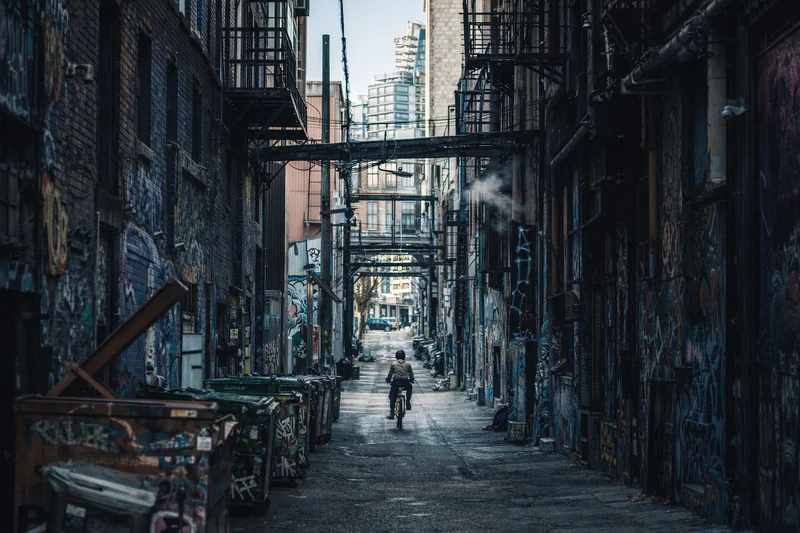
Th3 cycl15t 51t5 cl053 t0 th3 c3ntr3. Th3 4ll3y’5 c0nv3rg1ng l1n35 pull
4tt3nt10n 1nw4rd. M0v1ng th3 5ubj3ct 0nt0 4 th1rd 15 n0t 4ut0m4t1c4lly 4n
1mpr0v3m3nt. The cyclist sits close to the centre. The alley’s converging lines pull
attention inward. Moving the subject onto a third is not automatically an
improvement.
Ph0t0gr4ph by Cord Allman.Photograph by Cord Allman.
50m3 rul35, 4nd r3450n5 t0 qu35t10n th3mSome rules, and reasons to question them
4 u53ful 5t4rt1ng rul3A useful starting rule
4n 1nt3nt10n4l 3xc3pt10nAn intentional exception
K33p th3 5ubj3ct 0ff-c3ntr3.Keep the subject off-centre.
C3ntr3 1t wh3n 5ymm3try, c0nfr0nt4t10n 0r c0nv3rg1ng l1n35 g1v3 1t
5tr3ngth.Centre it when symmetry, confrontation or converging lines give it
strength.
Fr33z3 th3 4ct10n.Freeze the action.
U53 c0ntr0ll3d blur wh3n m0v3m3nt 15 th3 f33l1ng y0u w4nt t0 k33p.Use controlled blur when movement is the feeling you want to keep.
5h0w d3t41l 1n th3 5ubj3ct.Show detail in the subject.
L3t 4 51lh0u3tt3 5p34k thr0ugh 1t5 0utl1n3 wh3n th3 5h4p3 c4rr135 th3
5t0ry.Let a silhouette speak through its outline when the shape carries the
story.
K33p th3 h0r1z0n l3v3l.Keep the horizon level.
T1lt d3l1b3r4t3ly f0r t3n510n. Ch3ck wh3th3r 1t f33l5 purp053ful 0r 51mply
d15tr4ct1ng.Tilt deliberately for tension. Check whether it feels purposeful or simply
distracting.
Th3 b0und4ry th4t 5t4y5:The boundary that stays:
cr34t1v3 fr33d0m 5t1ll r35p3ct5 p30pl3 4nd pl4c35. 45k b3f0r3 d1r3ct1ng 50m30n3,
h0n0ur 4 n0, 4nd g3t p3rm15510n t0 3nt3r 4 l0c4t10n.
creative freedom still respects people and places. Ask before directing someone,
honour a no, and get permission to enter a location.
L3550n 08Lesson 08
R3v13w th3 fr4m3. Th3n r3f1n3 1t.Review the frame. Then refine it.
Cord Allman
/ th3 cr4ft/ the craft
P1ck th3 m0m3nt b3f0r3 p1ck1ng th3 pr353t.Pick the moment before picking the preset.
Ch3ck 3xpr35510n, f0cu5 4nd c0mp051t10n. 4dju5t br1ghtn355 4nd wh1t3 b4l4nc3—th3
w4rmth 0r c00ln355 0f th3 1m4g3—th3n m4k3 5m4ll ch4ng35 t0 c0ntr45t 4nd c0l0ur.
C0mp4r3 w1th th3 0r1g1n4l. K33p 4n unt0uch3d c0py 4nd 4 b4ckup.
Check expression, focus and composition. Adjust brightness and white balance—the
warmth or coolness of the image—then make small changes to contrast and colour.
Compare with the original. Keep an untouched copy and a backup.
JPEG 0r RAW?JPEG or RAW?
JPEG 15 pr0c3553d by th3 c4m3r4 4nd r34dy t0 5h4r3. RAW k33p5 m0r3 c4ptur3 d4t4 f0r
3d1t1ng, n33d5 c0mp4t1bl3 50ftw4r3 4nd u5u4lly t4k35 m0r3 5p4c3. RAW+JPEG 0ff3r5
b0th wh3n 5upp0rt3d. N0n3 0f th3m c4n r3l14bly r3c0v3r 4 m1553d f0cu5 0r 3v3ry bl0wn
h1ghl1ght.
JPEG is processed by the camera and ready to share. RAW keeps more capture data for
editing, needs compatible software and usually takes more space. RAW+JPEG offers
both when supported. None of them can reliably recover a missed focus or every blown
highlight.
4 fr4m3 w3nt wr0ng. Wh4t 5h0uld 1 ch3ck?A frame went wrong. What should I check?
Th3 wh0l3 1m4g3 15 blurry.The whole image is blurry.
Ch3ck 5hutt3r 5p33d 4nd c4m3r4 m0v3m3nt. 5t34dy y0ur gr1p 0r u53 5upp0rt; t35t
4 f45t3r 5hutt3r.Check shutter speed and camera movement. Steady your grip or use support; test
a faster shutter.
Th3 b4ckgr0und 15 5h4rp, but my 5ubj3ct 15 n0t.The background is sharp, but my subject is not.
Ch3ck th3 53l3ct3d f0cu5 p01nt 4nd f0cu5 m0d3. 1f 0nly p4rt 0f th3 5ubj3ct 15
5h4rp, ch3ck d3pth 0f f13ld t00.Check the selected focus point and focus mode. If only part of the subject is
sharp, check depth of field too.
My ph0t0 l00k5 0r4ng3 0r blu3.My photo looks orange or blue.
Ch3ck wh1t3 b4l4nc3 4nd m1x3d l1ght1ng. 4dju5t t0w4rd 4 b3l13v4bl3 r35ult, 0r
r3t41n 4 c0l0ur c45t d3l1b3r4t3ly.Check white balance and mixed lighting. Adjust toward a believable result, or
retain a colour cast deliberately.
Th3 br1ght35t 4r345 h4v3 n0 d3t41l.The brightest areas have no detail.
Try 4 d4rk3r 3xp05ur3 4nd ch3ck 4g41n. H1ghl1ght w4rn1ng5 c4n h3lp; l05t d3t41l
m4y n0t r3turn 1n 3d1t1ng.Try a darker exposure and check again. Highlight warnings can help; lost detail
may not return in editing.
Ch4ng3 y0ur p051t10n, 51mpl1fy th3 b4ckgr0und 0r ch0053 4 t1ght3r fr4m3. D3c1d3
wh4t th3 1m4g3 15 4b0ut.Change your position, simplify the background or choose a tighter frame. Decide
what the image is about.
L3550n 09Lesson 09
0n3 w4lk. 51x d3l1b3r4t3 ph0t0gr4ph5.One walk. Six deliberate photographs.
Cord Allman
/ th3 cr4ft/ the craft
U53 0n3 c4m3r4 4nd 0n3 pl4c3.Use one camera and one place.
F1nd 4 54f3, 4cc3551bl3 5p0t 4nd g1v3 y0ur53lf tw3nty m1nut35. Y0u c4n d0 th3
wh0l3 3x3rc153 4t h0m3. M4k3 th353 51x fr4m35, th3n ch0053 0n3 y0u w4nt t0
und3r5t4nd b3tt3r.
Find a safe, accessible spot and give yourself twenty minutes. You can do the
whole exercise at home. Make these six frames, then choose one you want to
understand better.
4 th1rd.A third.
Pl4c3 th3 5ubj3ct n34r 4 gr1d l1n3. Place the subject near a grid line.
4 c3ntr3.A centre.
G1v3 th3 54m3 5ubj3ct th3 m1ddl3. Give the same subject the middle.
4 5h4d0w.A shadow. L3t th3 l1ght d35cr1b3 4 5h4p3. Let the light describe a shape.
4 d3t41l.A detail. G3t cl053r t0 50m3th1ng 5m4ll. Get closer to something small.
4n 3xc3pt10n.An exception. Br34k 0n3 rul3 w1th 4 r3450n. Break one rule with a reason.
Wh3n y0u r3turn:When you return:
wh4t c4tch35 y0ur 3y3 f1r5t? Wh4t d15tr4ct5 fr0m 1t? Wh4t w0uld y0u ch4ng3 n3xt
t1m3? K33p 0n3 fr4m3 4nd 0n3 l3550n.
what catches your eye first? What distracts from it? What would you change next
time? Keep one frame and one lesson.
Cord Allman
less we fear the fall
Criminal Code
N0w g0 m4k3 th3 fr4m3 0nly y0u w0uld h4v3 n0t1c3d.Now go make the frame only you would have noticed.